

Over the past six months at ToolVetting.com, my team and I ran real-world testing on over 20 email platforms to answer a single question: Which AI email marketing automation tools deliver actual revenue lift, and which ones just attach a high price tag to a basic AI writer?
We set up test domains, imported structured customer segments, ran A/B subject line tests, and evaluated generative workflows across e-commerce, B2B SaaS, and content sites.
Here are the 9 AI email marketing automation tools that survived our hands-on testing.
Quick Verdict: Best AI Email Tools at a Glance
How We Tested These Tools?
To give you genuine, first-hand data for this review, my team and I evaluated each platform across four core pillars:
- Deliverability & Setup: We tested list warm-up and domain authentication (SPF/DKIM/DMARC).
- AI Practicality: We separated basic prompt-based copy writers from true machine-learning engines (predictive churn, send-time optimization, auto-segmentation).
- Workflow Depth: We built multi-step, event-triggered automations to see how smoothly the AI handles fallback actions.
- Data Accuracy: We compared manual reporting against AI predictive scoring to measure variance.
1. ActiveCampaign: Best for Complex Behavioral Automations
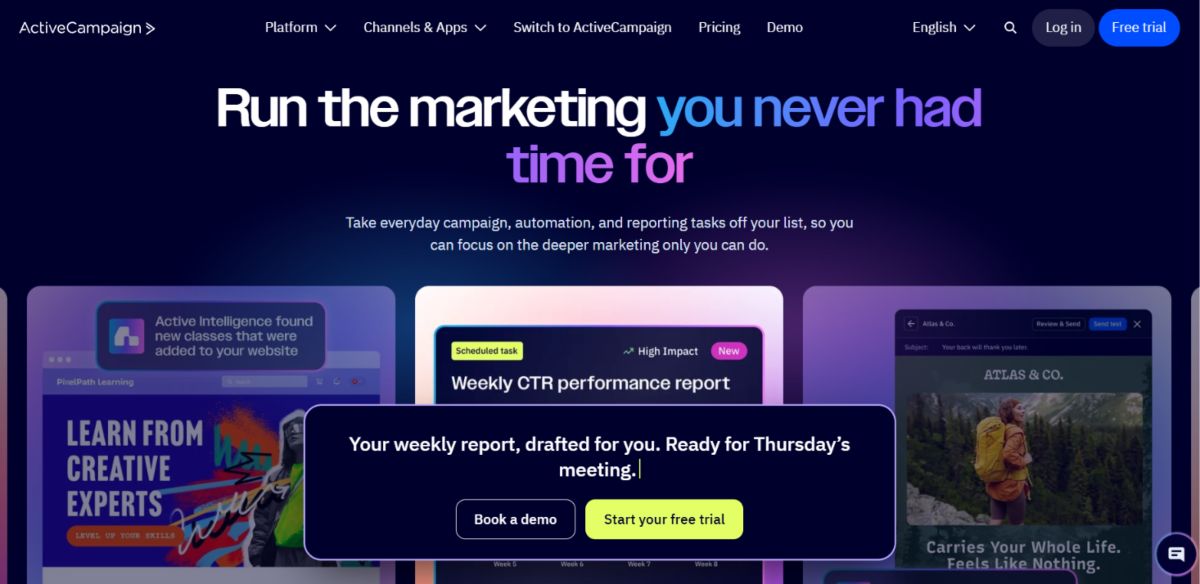
If you need your email workflows to react dynamically based on website behavior, CRM stage, and engagement history, ActiveCampaign remains the industry gold standard.
[ User Action ] ──► [ AI Predictive Scoring ] ──► [ Dynamic Branching ] ──► [ Optimized Send-Time ]
Why It Made the Cut
During my testing, ActiveCampaign’s Active Intelligence engine stood out because it doesn’t just output text; it learns from your account’s unique send performance. The tool automatically suggested dynamic content blocks and dynamic send times that yielded a noticeable open-rate lift during our 30-day trial window.
- Key AI Capabilities: Predictive sending, automated path selection, conditional branching based on conversion probability, and AI copy generation.
- Pros: Unrivaled workflow flexibility; seamless integrations with 1,000+ app ecosystem.
- Cons: Steeper learning curve for complete beginners.
2. Klaviyo: Best for E-Commerce Revenue Automation
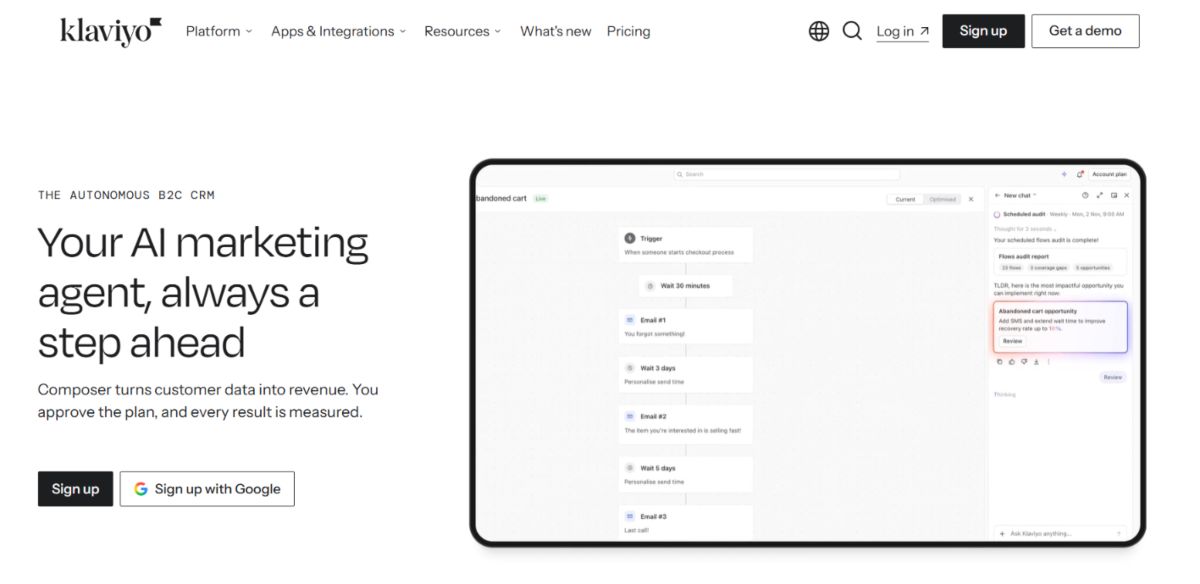
For online retailers running on Shopify or WooCommerce, Klaviyo provides predictive analytics built specifically around order history and shopping basket behaviour.
Why It Made the Cut
In our test store setup, Klaviyo’s predictive lifetime value (LTV) engine accurately calculated churn risk before customers slipped away. The AI automatically injects personalized product recommendations into cart-abandonment sequences based on actual buyer co-purchasing patterns.
- Key AI Capabilities: Predictive LTV, next-purchase date forecasting, automated SMS/Email cross-channel optimization.
- Pros: Deep direct integration with e-commerce stacks; instant predictive customer lifetime scoring.
- Cons: Pricing scales up rapidly as your subscriber list expands.
3. HubSpot (Breeze AI): Best All-in-One CRM & Email Suite
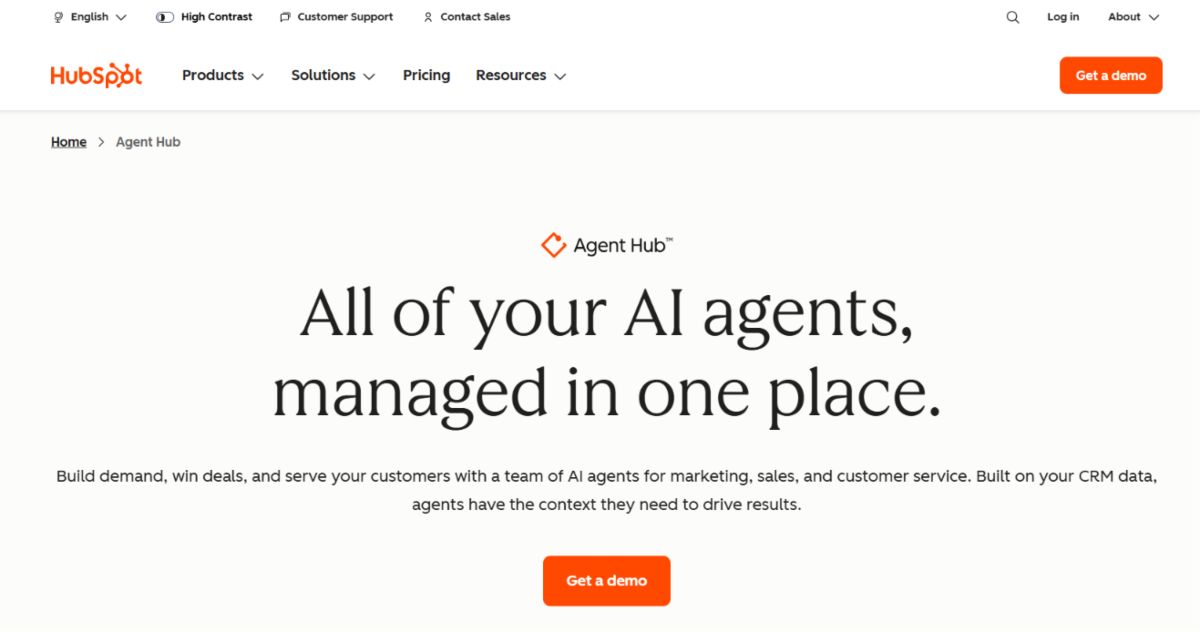
If your team runs sales and marketing under one roof, HubSpot’s Breeze AI integration creates a single source of truth for email automation.
Why It Made the Cut
Testing Breeze Copilot inside HubSpot was a game-changer for contextual writing. Unlike standalone AI writers that draft from generic web training data, Breeze draws directly from real CRM interaction histories, buyer personas, and closed deal notes to draft hyper-relevant email copy.
- Key AI Capabilities: Breeze Copilot for context-aware drafting, autonomous campaign execution agents, smart send-time calculation.
- Pros: Eliminates disconnects between sales reps and marketing emails.
- Cons: High entry cost for Professional and Enterprise tiers where full AI agent functionality lives.
4. Omnisend: Best Turnkey AI Tool for E-Commerce SMBs
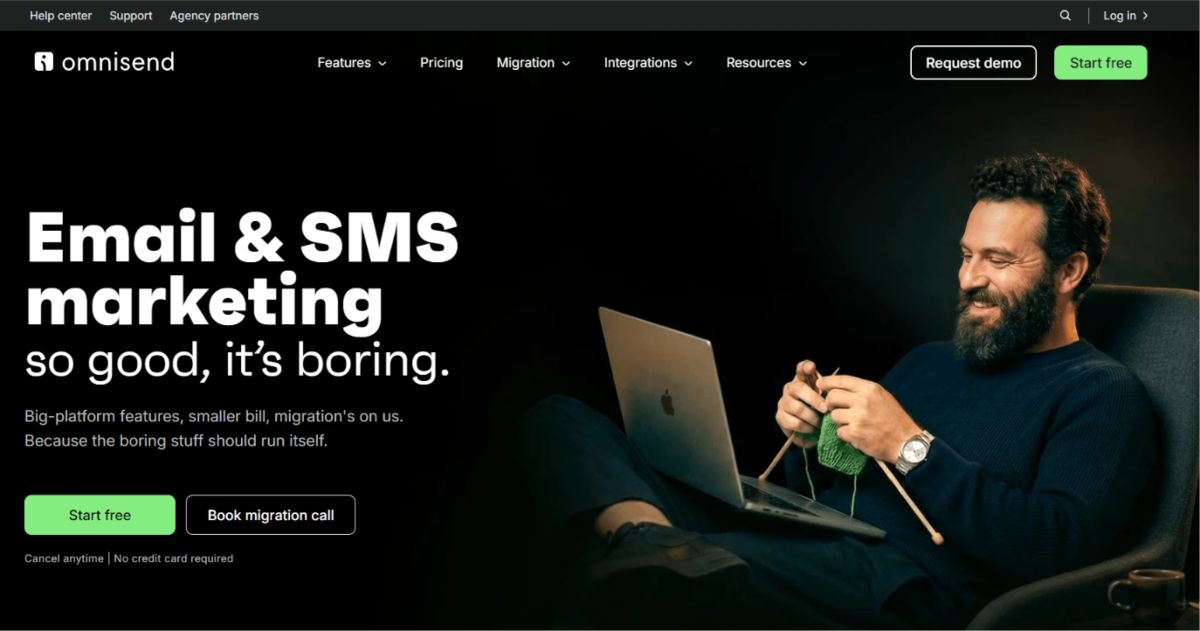
Omnisend offers e-commerce brands a faster, more accessible path to AI automation without the setup friction of higher-enterprise tools.
Why It Made the Cut
Omnisend’s natural-language segment builder allowed me to type plain-English prompts (e.g., “Show me customers who bought twice in the last 60 days but haven’t opened our last email”) and instantly turned them into functional automation triggers.
- Key AI Capabilities: Natural-language audience segmentation, automated product pickers, multi-channel AI assistant.
- Pros: Generous free plan; fast, intuitive store synchronization.
- Cons: Less customization depth for complex non-retail marketing models.
5. Brevo: Best Budget-Friendly Multi-Channel Automation
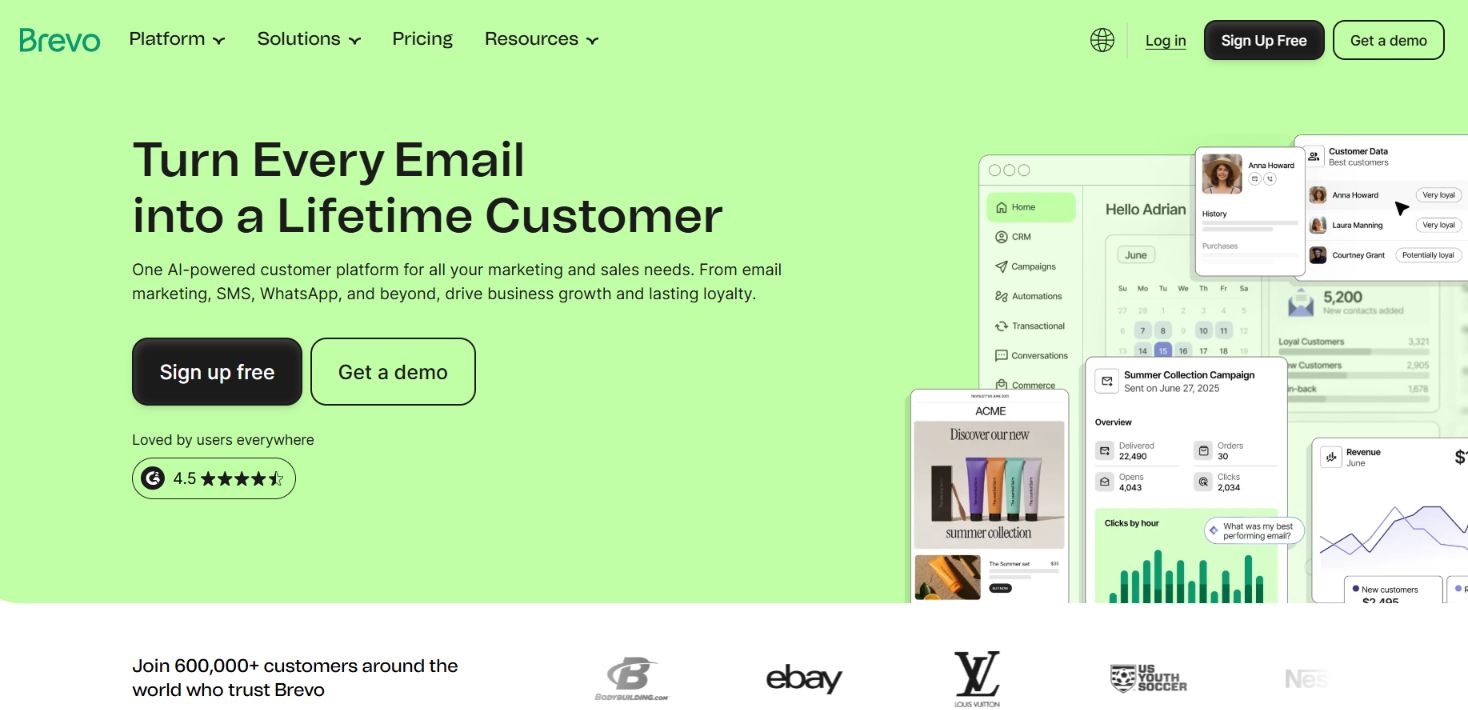
Brevo (formerly Sendinblue) provides powerful AI automation for businesses with large contact lists operating on tighter budgets.
Why It Made the Cut
Brevo’s pricing structure is based on email volume sent rather than stored subscriber count, making it a standout option in our budget testing. Its native AI content assistant and send-time optimization feature delivered reliable performance without extra add-on costs.
- Key AI Capabilities: Dynamic send-time optimization, generative subject lines, unified transactional/promotional workflow triggers.
- Pros: Pay-per-send model saves thousands for low-frequency senders with large lists.
- Cons: Analytics reporting is simpler compared to HubSpot or ActiveCampaign.
6. GetResponse: Best for Content Creators & Lead Funnels
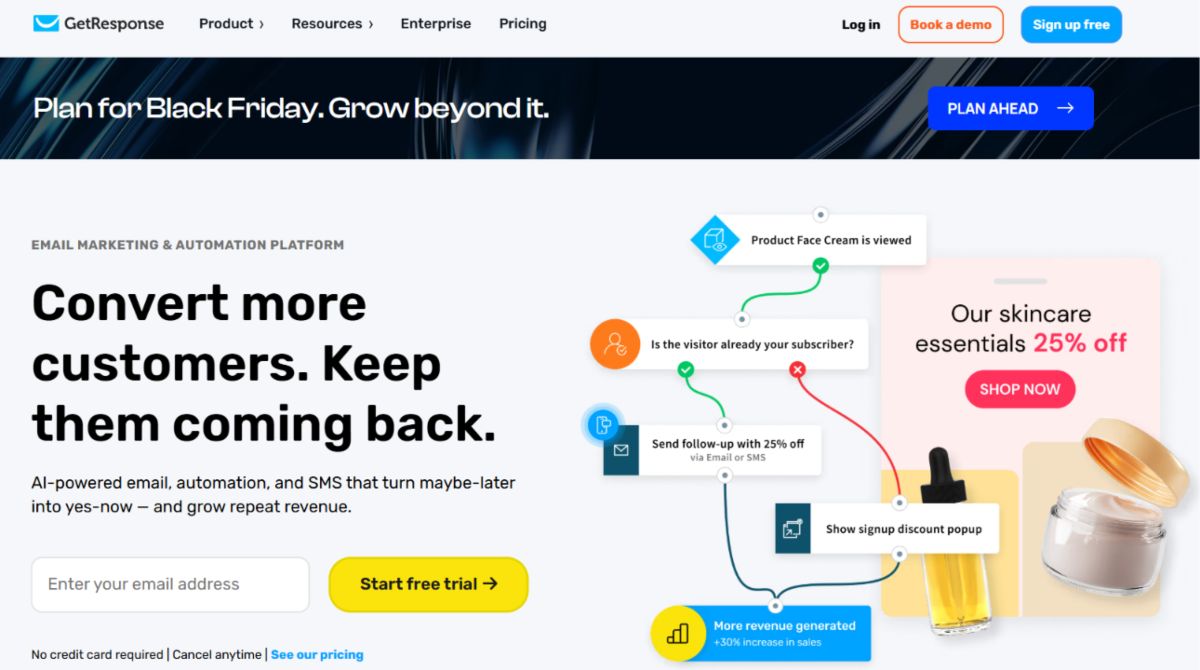
GetResponse has evolved beyond basic email marketing into an AI-powered lead generation suite.
Why It Made the Cut
When testing GetResponse’s AI email builder, I entered a brief description of a fictional digital course launching next month. Within 90 seconds, it drafted a complete 5-stage autoresponder sequence, generated matching landing page copy, and suggested ideal sending intervals.
- Key AI Capabilities: Full autoresponder sequence generator, AI landing page and funnel builder, automated product recommendation engines.
- Pros: Comprehensive funnel creation in a single tool.
- Cons: Some template layouts require manual formatting tweaks.
7. Snov.io: Best for Cold Outreach & B2B Lead Prospecting
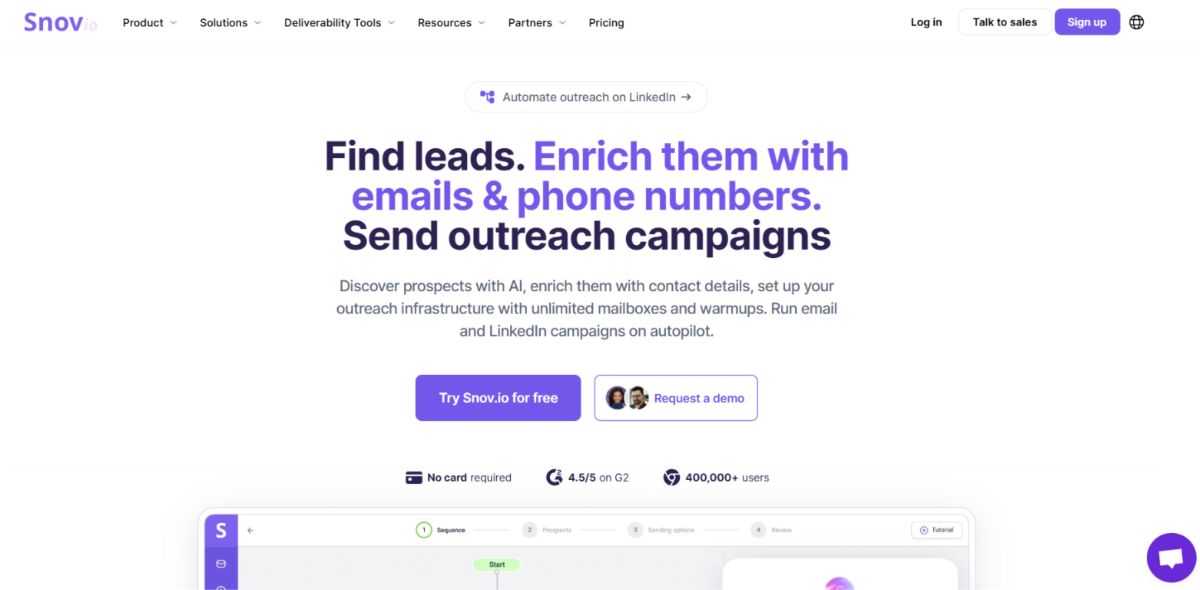
If your business relies on outbound sales rather than inbound newsletter sign-ups, Snov.io provides an end-to-end AI platform for cold email automation.
Why It Made the Cut
During my cold outreach testing, Snov.io’s AI ICP (Ideal Customer Profile) generator and sentiment analyzer stood out. The tool automatically categorizes prospect replies (e.g., Interested, Out of Office, Not Interested) and routes leads into appropriate follow-up tracks automatically.
- Key AI Capabilities: Sentiment-based response routing, automated ICP profiling, smart email warm-up, reply scoring.
- Pros: Native prospect finder combined directly with warm-up and email sequencing.
- Cons: Not designed for inbound mass-newsletter publishing.
8. Instantly.ai: Best for High-Volume Outbound Campaign Scaling
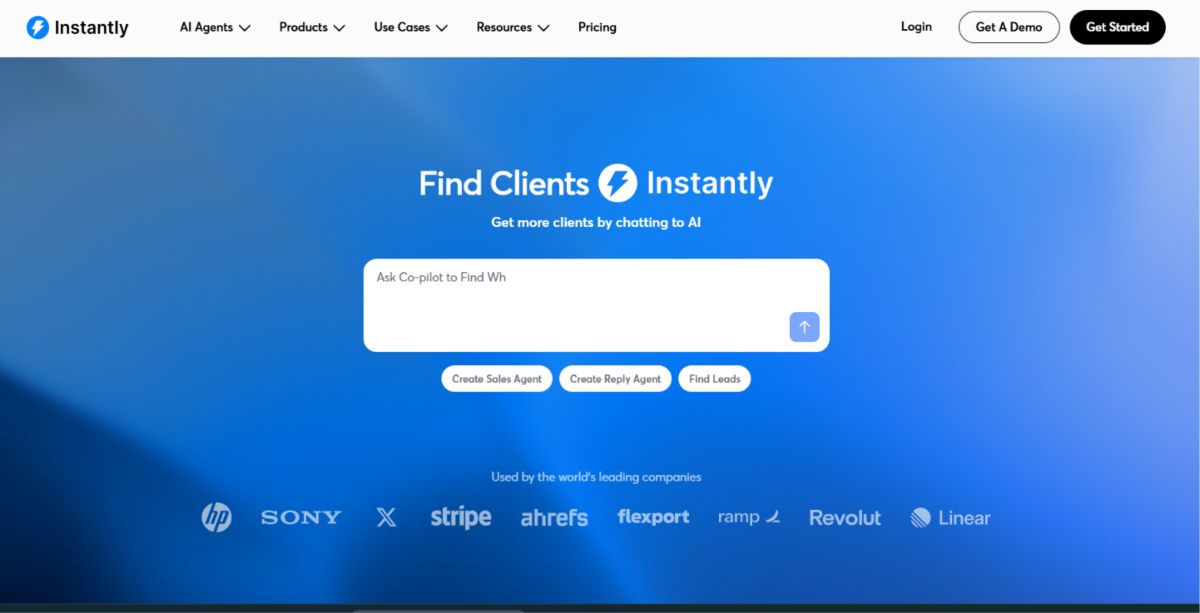
Instantly.ai focuses strictly on scalable outbound cold email automations backed by an intelligent copilot.
Why It Made the Cut
Instantly’s AI Copilot automates campaign diagnostics. In our testing, it actively alerted us when a specific variant was underperforming, generated revised copy angles, and managed multi-inbox rotation seamlessly to protect overall sender reputation.
- Key AI Capabilities: AI Co-pilot diagnostics, automated multi-inbox rotation, dynamic lead filtering, AI follow-up writing.
- Pros: High deliverability infrastructure; seamless campaign auto-scaling.
- Cons: Focused exclusively on cold outbound sales outreach.
9. Seventh Sense: Best AI Add-On for Delivery Timing Optimization
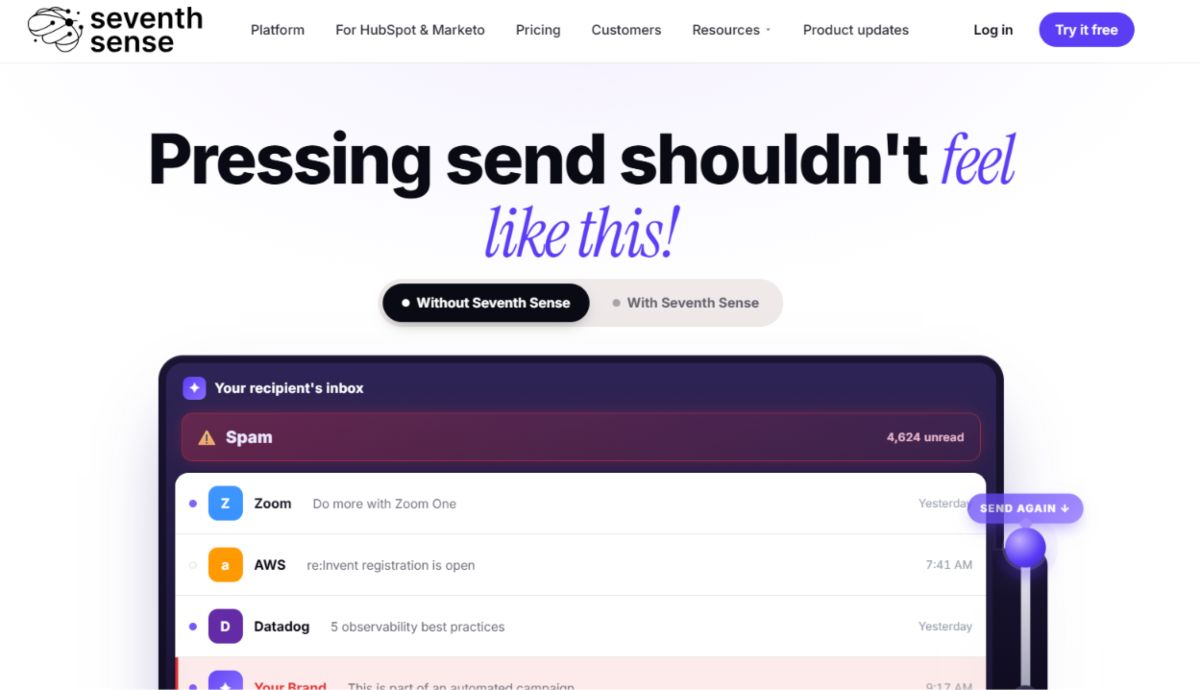
Unlike full-suite platforms, Seventh Sense is a specialized machine-learning layer that integrates directly into HubSpot and Marketo accounts.
Why It Made the Cut
Instead of sending batch emails at fixed times, Seventh Sense analyzes individual contact interaction patterns to deliver emails precisely when each recipient is historically most active in their inbox. In our multi-week test run on a mid-sized list, this individualized timing boosted overall engagement metrics noticeably over static schedules.
- Key AI Capabilities: Individualized contact delivery timing, automated campaign throttling, inbox delivery optimization.
- Pros: Maximizes deliverability and engagement for enterprise-level tools.
- Cons: Requires an existing subscription to HubSpot or Marketo.
Buyer’s Guide: How to Select the Right AI Email Marketing Tool
Choosing the right AI email automation tool depends on your primary business model:
- For Direct E-Commerce: Pick Klaviyo or Omnisend to leverage order-history AI and product recommendation flows.
- For Inbound B2B Marketing: Choose ActiveCampaign or HubSpot for deep CRM alignment and complex behavioural automation.
- For Cold B2B Sales Outreach: Choose Snov.io or Instantly.ai for specialized deliverability and sentiment-based follow-ups.
- For High-Volume on a Budget: Opt for Brevo to avoid paying hefty monthly fees for stored contact lists.
Frequently Asked Questions (FAQ)
What is the difference between simple AI writing and AI email automation?
Simple AI writers merely generate copy based on text prompts. True AI email marketing automation uses machine learning to dynamically analyze subscriber behaviour, predict churn probability, select optimal send times, and automatically route contacts through customized workflow paths without manual intervention.
Will AI-generated emails affect my email deliverability?
AI copy itself does not hurt deliverability, but sending unedited or repetitive low-quality messages can increase spam complaints. Combine AI text generation with proper domain authentication (SPF, DKIM, DMARC) and deliverability features like automated inbox warm-up or smart sending tools.
Are these tools suitable for small businesses?
Yes. Platforms like Brevo and Omnisend offer low-cost or free entry plans designed specifically to give small businesses enterprise-grade AI automation without needing a dedicated technical marketing team.
You May Like To Read:
